Blog
The Ultimate Guide to Modern Kilt Fashion: History, Styles, and Styling Tips for 2026

The Evolution of the Kilt: From Survival to Style
The kilt is no longer just a relic of the Scottish Highlands; it is a global fashion statement. Whether you are looking for a traditional tartan for a wedding or a rugged utility kilt for a music festival, the world of kilt fashion in 2026 is more diverse than ever.
In this comprehensive guide, we explore the history, the evolution, and the modern styling tips that will help you master the art of wearing a kilt with confidence.
The Evolution of the Kilt: From Survival to Style
The kilt began its journey in the 16th century as the féileadh mòr (Great Kilt). Far from being a fashion piece, it was a multi-functional survival tool. This long piece of untailored wool served as a garment by day and a sleeping bag by night, protecting Highlanders from the brutal Scottish elements.
By the 18th century, the féileadh beag (Little Kilt)—the tailored version we recognize today—was popularized. After being banned by the British government following the Jacobite Rising of 1745, the kilt transitioned from everyday Highland wear to a powerful symbol of Scottish identity and, eventually, a high-fashion staple seen on runways in Milan and Paris.
Types of Kilts: Choosing Your Vibe
Understanding the different types of kilts is essential for both your wardrobe and your SEO strategy. Here are the three main categories dominating the market today:
1. Traditional Tartan Kilts
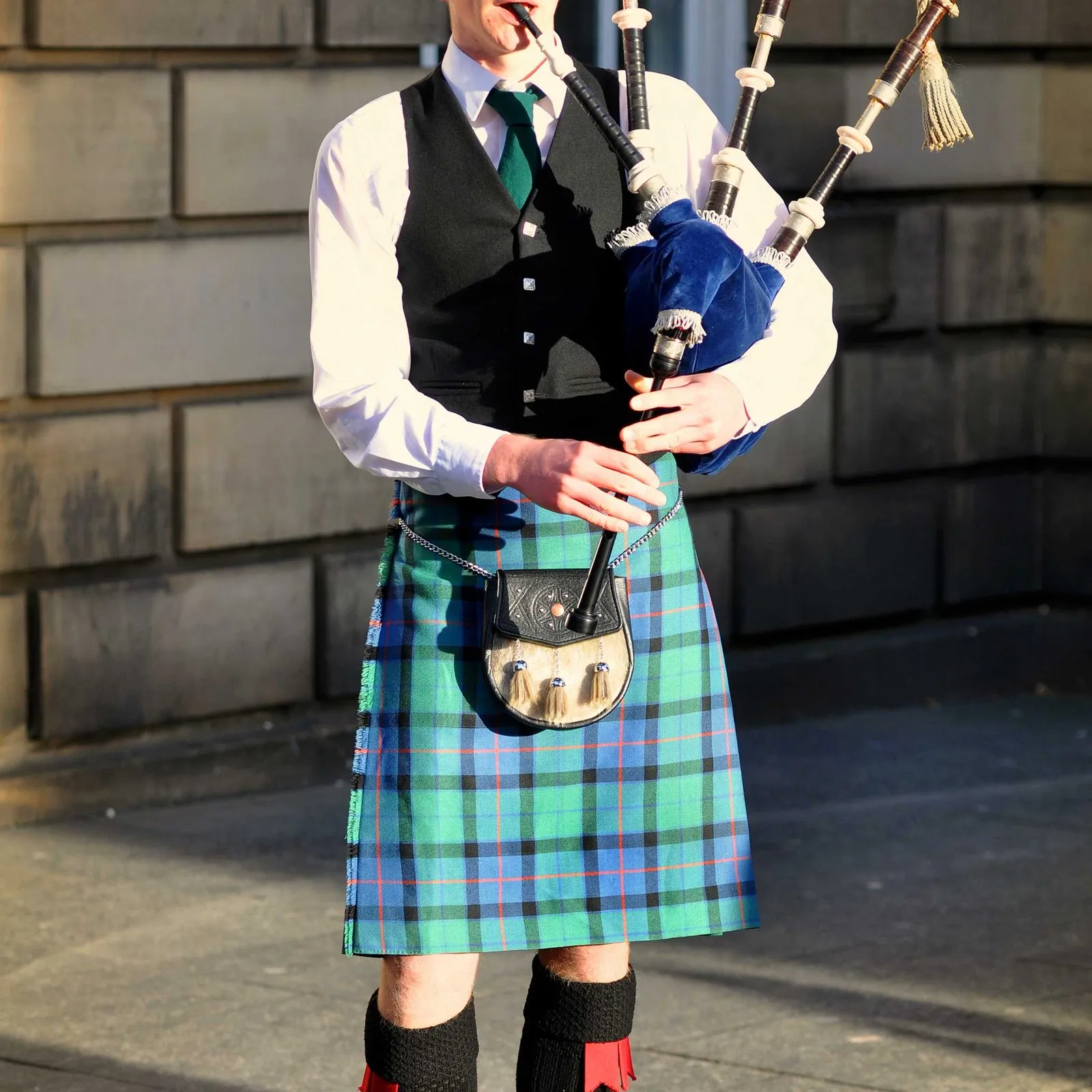
The gold standard of kilt fashion. These are typically made from 8 yards of pure wool and feature specific clan patterns (setts).
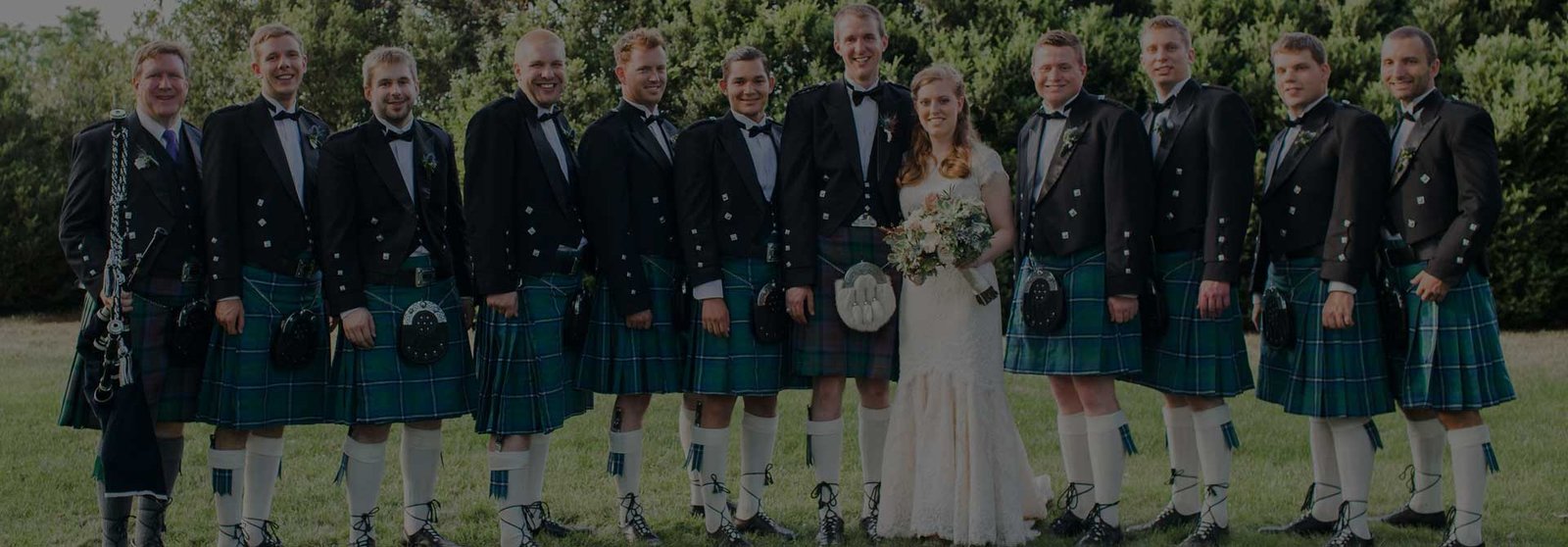
- Best for: Weddings, graduations, and formal ceremonies.
- Key Feature: Knife or box pleats tailored to the “sett” or the “stripe.”
2. Utility Kilts
Utility kilts have revolutionized the industry by focusing on functionality. Made from heavy-duty cotton drill or canvas, these are the go-to for modern men who want the kilt silhouette without the formal requirements.
- Best for: Workwear, hiking, and festivals.
- Key Feature: Large cargo pockets, hammer loops, and snap-button closures.
3. Tactical and Hybrid Kilts
The “tough guys” of the kilt world. Tactical kilts are built with ripstop fabric and often include MOLLE webbing for gear attachment. Hybrid kilts offer the best of both worlds—tartan patterns on the inside of the pleats with a solid-colored cotton exterior.
How to Style Your Kilt in 2026
Fashion is about self-expression, but kilt-wearing does come with a few “pro-tips” to keep you looking sharp.
The Casual Look
Forget the formal jacket. For a casual day out, pair your kilt with:
- Top: A simple polo shirt or a crisp linen Jacobite shirt (a loose-fitting, lace-up shirt).
- Footwear: Rugged leather boots or even high-top sneakers for an urban streetwear vibe.
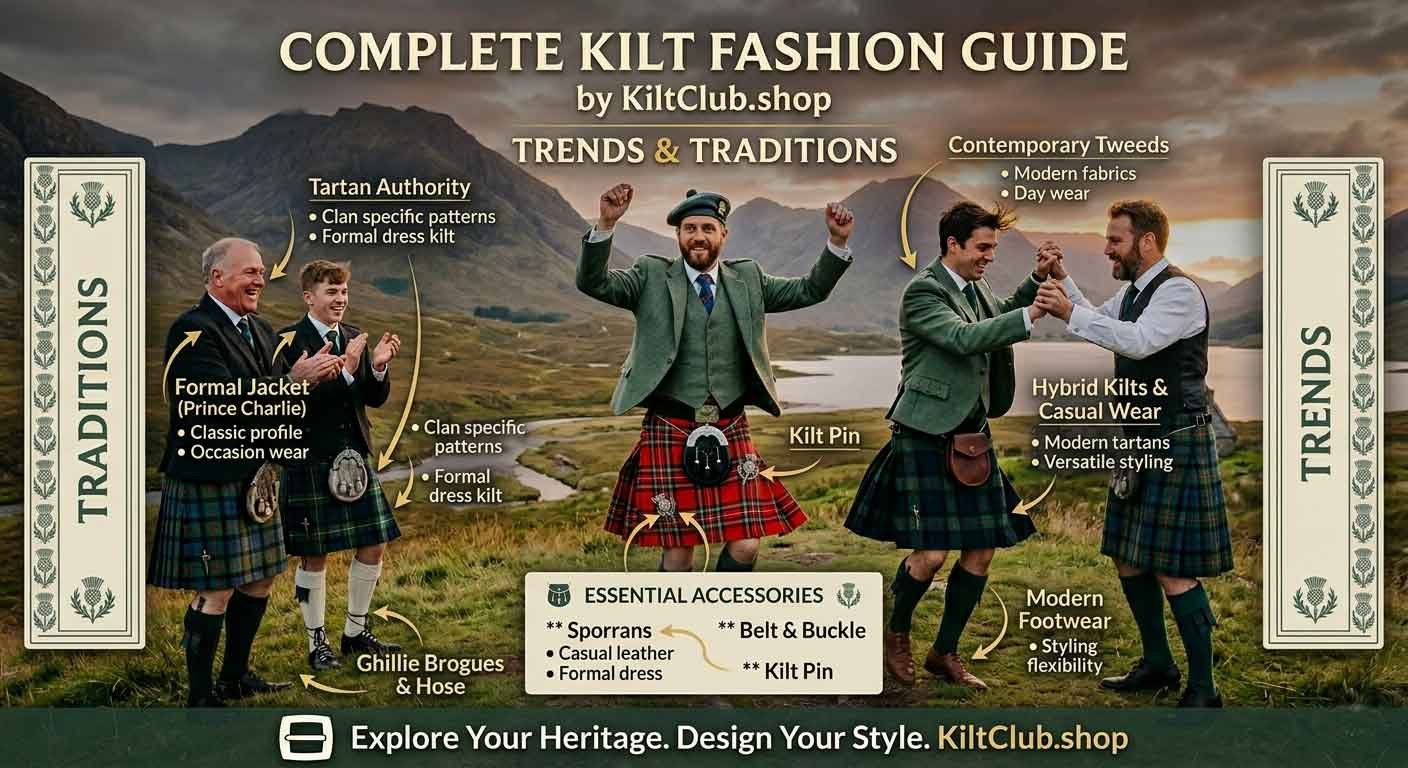
- The Sporran: A simple leather day sporran without the flashy tassels.
The Formal (Black Tie) Look
When the occasion calls for prestige, the details matter:
- The Jacket: A Prince Charlie jacket for evening wear or an Argyll jacket for semi-formal events.
- The Hose: Knee-high kilt socks with a decorative “flash” (the ribbons sticking out the side).
- The Sgian-Dubh: A small decorative knife tucked into the top of your hose on your dominant side.
The Golden Rules of Kilt Fit
The Sporran Placement: The sporran should be centered and sit about three finger-widths below the top of the kilt.
The Navel Rule: Unlike trousers that sit on the hips, a traditional kilt should sit at your natural waist—right around the belly button.
The Knee Rule: The kilt should hit the middle of your kneecap. If it covers your knees, it’s too long; if it’s above them, it’s too short.
Frequently Asked Questions (FAQs)
Q1: Do I have to be Scottish to wear a kilt?
Absolutely not! While the kilt has Scottish roots, it is a recognized fashion garment worldwide. Many people wear “Universal” or “National” tartans that don’t belong to a specific clan, or they opt for utility kilts.
Q2: What is worn under a kilt?
The age-old question! Traditionally, nothing is worn (“going commando”), but in modern times, it is entirely a matter of personal comfort and hygiene. For sports or public events, most people prefer dark underwear or compression shorts.
Q3: How do I clean my kilt?
Wool kilts should generally be dry-cleaned to maintain the pleats. Utility kilts made of cotton can often be machine-washed on a cold cycle, but always check the manufacturer’s label.
Q4: Can women wear kilts?
Yes. While traditional kilts are a male garment, kilt-inspired skirts and “kilted skirts” have been a staple in women’s fashion for decades, often featured by brands like Vivienne Westwood and Alexander McQueen.
Q5: Why are 8-yard kilts better than 5-yard kilts?
The extra yardage allows for deeper, sharper pleats. This gives the kilt a better “swing” when you walk and ensures the back of the garment looks crisp and full.
Conclusion
Kilt fashion in 2026 is a blend of respect for the past and a bold embrace of the future. Whether you are wearing one to honor your ancestors or simply because you love the airflow and pockets of a utility kilt, there has never been a better time to join the “kilted” ranks.
Are you ready to find your tartan? Explore our latest collection and discover how this timeless garment can redefine your personal style.